Pandemic Hits Chinese Restaurants Across Metro Vancouver — Restaurant Associations Call for Unity and Collective Support to Overcome Difficult Times February 21, 2020 | Richmond, British Columbia, Canada
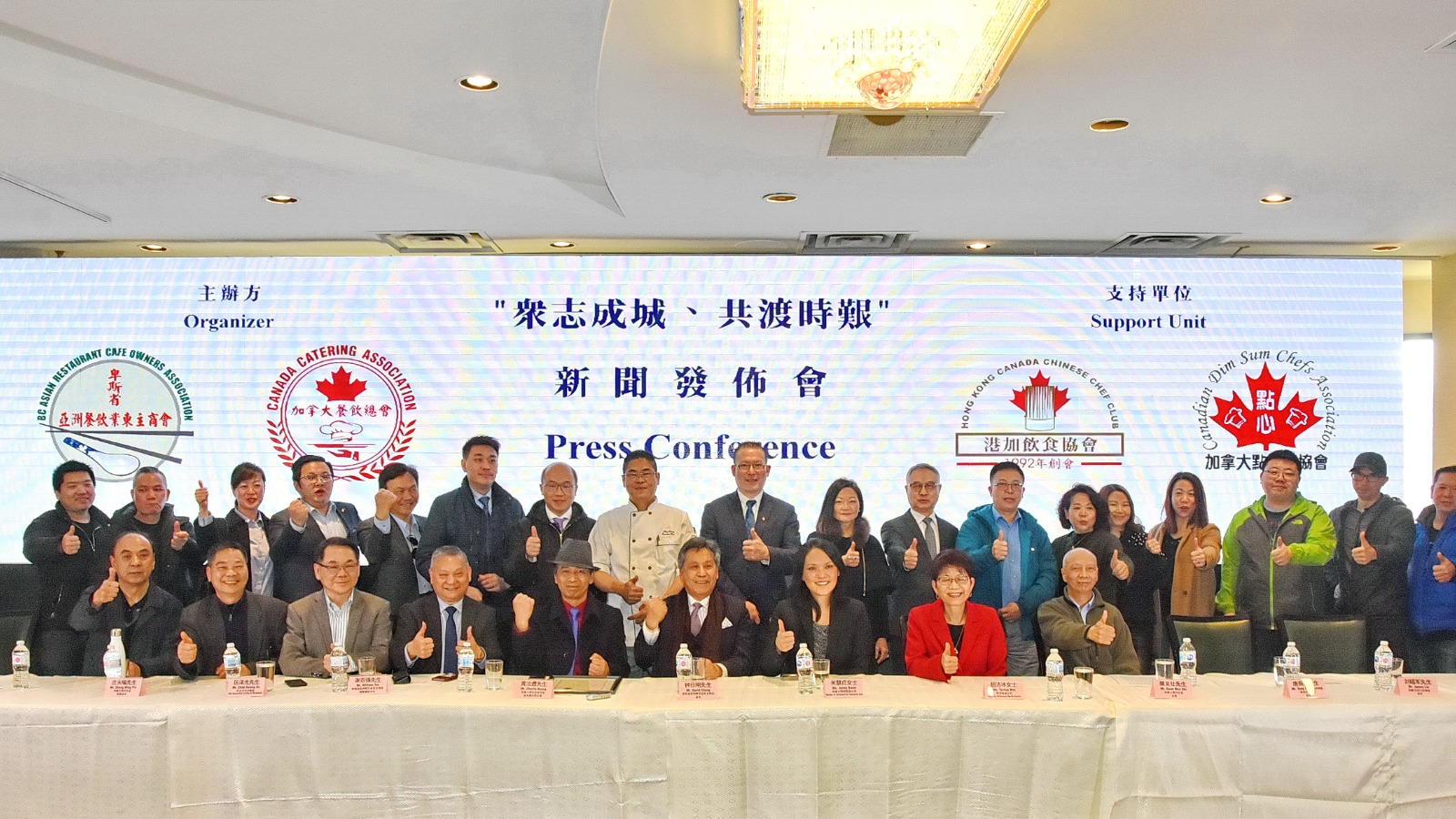
On the afternoon of February 21, 2020, the BC Asian Restaurant & Café Owners Association, in collaboration with the Canadian Restaurant Association, held a press conference in Richmond under the theme “United We Stand, Together We Overcome Adversity” (眾志成城、共度時艱).
The press conference addressed the severe impact of the novel coronavirus (COVID-19) outbreak on Chinese restaurants throughout Metro Vancouver and called upon all levels of government, commercial property owners, restaurant operators, and consumers to work together to help the industry overcome its growing operational and financial challenges.
The event also received support from elected representatives at the federal, provincial, and municipal levels, demonstrating their shared concern for the local restaurant industry.
David Chung, Founding President of the BC Asian Restaurant & Café Owners Association, highlighted the financial pressures facing restaurant operators, particularly commercial rent, which represents one of the industry's largest fixed operating expenses.
With restaurant revenues declining significantly, rental obligations had become an increasingly heavy burden for many businesses. Chung encouraged restaurant owners experiencing financial hardship to communicate proactively and openly with their landlords to negotiate reasonable arrangements, including temporary rent deferrals or flexible payment schedules.
He expressed confidence that, through mutual understanding and consideration, property owners would be willing to offer appropriate assistance, providing restaurant operators with additional time to navigate the crisis while protecting the long-term interests of both landlords and tenants.
William Tse, Director and Secretary-General of the BC Asian Restaurant & Café Owners Association, stated that the Association was actively assisting its members in identifying practical solutions to the operational challenges brought about by the outbreak.
These efforts included making appropriate staffing adjustments, strengthening restaurant cleaning and sanitation practices, and improving daily operational efficiency.
The Association was also actively communicating with takeout and food delivery service providers to explore opportunities for expanding delivery operations. By developing additional revenue streams and controlling operating costs, the Association hoped to help restaurants reduce the financial impact of the outbreak and maintain business continuity.
Charlie Huang, Founding President and Co-Chairman of the Canada Catering Association, emphasized that Chinese restaurants in Metro Vancouver have long been recognized for their rich culinary heritage, authentic cuisine, and diverse dining experiences.
Beyond providing high-quality dining options to local residents, Chinese restaurants have made significant contributions to employment, tax revenues, tourism, and the overall economic development of the region.
However, growing public concerns surrounding the coronavirus outbreak had led to a substantial decline in customer traffic, placing considerable financial pressure on many establishments.
According to industry reports presented at the time, some restaurants had experienced revenue declines of approximately 50 percent, while those facing more severe conditions reported losses reaching 70 to 80 percent.
As operating pressures intensified, some restaurants were forced to reduce employee working hours, while others temporarily suspended operations or took advantage of the business slowdown to undertake renovations and reduce ongoing expenses.
Wong urged all levels of government to recognize the serious difficulties confronting the restaurant industry and to strengthen border health screening and appropriate quarantine measures to address public concerns regarding the spread of the virus.
He also called for consideration of appropriate tax relief measures, including reductions or deferrals of property taxes, the Goods and Services Tax (GST), and the Provincial Sales Tax (PST), to help restaurant businesses ease their financial burdens.
In addition, Wong appealed to commercial property owners to consider offering temporary rent reductions or payment deferrals to restaurants affected by the outbreak, wherever financially feasible.
He emphasized that the continued operation of the restaurant industry was not merely a matter of business survival for restaurant owners, but also directly affected the livelihoods of numerous employees and their families. He therefore encouraged all sectors of society to demonstrate understanding, compassion, and mutual support.
Addressing the general public, Wong urged consumers to approach the outbreak with a rational and objective perspective, avoid unnecessary fear or misconceptions about Chinese restaurants, and continue supporting local establishments that had actively implemented proper cleaning and sanitation measures.
The press conference was attended by elected representatives from all three levels of government, including Jenny Kwan, Member of Parliament; Teresa Wat, Member of the Legislative Assembly of British Columbia; and Chak Au, Richmond City Councillor.
The representatives expressed concern over the economic consequences of the outbreak on the restaurant industry and acknowledged the proactive efforts made by Chinese restaurants throughout Metro Vancouver to strengthen cleaning, sanitation, and preventive health measures.
They called upon governments, commercial property owners, and the broader community to provide assistance to affected restaurant businesses, helping to protect local employment and support economic stability.
Participants at the press conference also emphasized that protecting public health and preventing the spread of infectious diseases should never result in prejudice, discrimination, or unfair treatment toward any ethnic group or community.
In the face of the economic and social pressures caused by the outbreak, community solidarity and mutual assistance were more important than ever. Participants encouraged the public to respond to the challenges with rationality, inclusiveness, compassion, and practical cooperation.
The BC Asian Restaurant & Café Owners Association and the Canada Catering Association called upon all sectors of society to stand united, support local restaurants, and work together to overcome these difficult times.
“United We Stand, Together We Overcome Adversity.”
________________________________________
Source: Sing Tao Daily, February 22, 2020. This article has been independently compiled, adapted, and rewritten based on the original news coverage. It is not a direct reproduction of the original publication.
https://www.singtao.ca/4108997/?variant=zh-cn